High-Frequency (HF) dipole antennas are essential tools for long-range communications, especially within the 3–30MHz HF Band.
In this article, I’ll take you through how I assembled a practical and low cost HF dipole antenna:

   1. cover its working principles
   2. parts needed
   3. length calculations
   4. impedance matching
What is a dipole antenna?
An HF dipole antenna is a two-conductor antenna optimised for high-frequency radio transmission and reception. It typically operates on bands such as 3.5 MHz, 7 MHz, 14 MHz, and above.
Key Features
-
Supports long-distance communication (over hundreds or thousands of kilometers)
-
Simple structure: two arms fed at the center
-
Horizontal or inverted-V installation
-
Works well with minimal ground reflection
Parts needed
Antenna mounting plate:
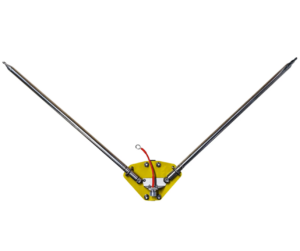
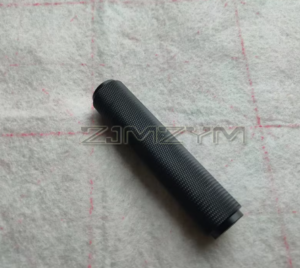
Balun (Balanced-to-Unbalanced Transformer:
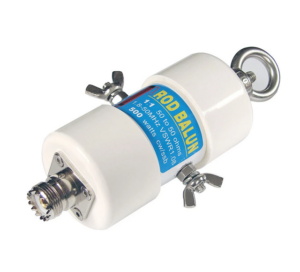
A 1:1 Balun available from AliExpress or Amazon about £20
Find item here: AliExpress
Helps to improve matching and reduce antenna noise.

Calculating arm lengths (adjust as necessary):

To determine the length of each dipole arm: Length (in meters) = 143 / Frequency (MHz)

Example element lengths (same each side):
For 7 MHz operation  (40-metre band): Total length ≈ 143 / 7  ≈ 20.43 meters → element ≈ 10.2 meters. Adjust both sides for fine-tuning.

For 14 MHz operation (20-metre band): Total length ≈ 143 / 14 ≈ 10.21 meters → Each element ≈ 5.1  meters. Adjust both sides for fine-tuning.

For 18 MHz operation (17-metre band): Total length ≈ 143 / 18 ≈ 7.9   meters → Each element ≈ 3.95 meters. Adjust both sides for fine-tuning.

For 21 MHz operation (15-metre band): Total length ≈ 143 / 21 ≈ 6.8   meters → Each element ≈ 3.4  meters. Adjust both sides for fine-tuning.

For 24 MHz operation (12-metre band): Total length ≈ 143 / 24 ≈ 5.74  meters → Each element ≈ 2.87 meters. Adjust both sides for fine-tuning.

For 29 MHz operation (10-metre band): Total length ≈ 143 / 29 ≈ 4.93  meters → Each element ≈ 2.46 meters. Adjust both sides for fine-tuning.

For 54 MHz operation  (6-metre band): Total length ≈ 143 / 54 ≈ 2.64  meters → Each element ≈ 1.32 meters. Adjust both sides for fine-tuning.


Chart showing arm-length for each band
| Band: | Calculated Arm Length: | Actual Arm Length: | Antenna elements |
| 10M | 2.46M | 2.62M | 5.5 Sections each side |
| 12M | 2.86M | 3.03M | 6.5 Sections each side |
| 15M | 3.37M | 3.32M | 7 Sections each side |
| 18M | 3.95M | 3.80M | 8.5 Sections each side |
| 20M | 5.04M | 5.46M | 13 Sections each side |